How this calculator measures
An anion gap calculator is used to estimate the anion gap, a fundamental value used in blood chemistry to interpret acid-base status. It is calculated from serum electrolytes, most commonly serum sodium, serum chloride, and serum bicarbonate. In some formulas, potassium is also included, though many clinical settings use the simplified version without it.
The anion gap reflects the balance between measured cations and measured anions in the blood. A higher-than-expected result often suggests unmeasured acids are present, which is why it is so useful in diagnosing metabolic acidosis and identifying an elevated anion gap. In practice, this makes the calculator a valuable tool for rapid laboratory interpretation and clinical assessment.
Because the result depends on routine lab values, an anion gap calculator can be used alongside broader diagnostic evaluation. It does not diagnose a disease by itself, but it helps identify patterns that require deeper analysis. In a patient with suspected inborn errors of metabolism, the calculated value can quickly point toward an acid-base disorder that needs urgent attention.
Why propionic acidemia influences the anion gap
Propionic acidemia is a type of an organic acidemia caused by propionyl-CoA carboxylase deficiency. This enzyme defect blocks normal breakdown of certain amino acids and odd-chain fatty acids, leading anion gap clinical significance to organic acid accumulation. As these acids build up, they contribute to acidemia and can produce a classic high anion gap metabolic acidosis.
The biochemical mechanism is key. In propionic acidemia, excess propionic acid and related metabolites raise the acid load in the blood. As bicarbonate is depleted buffering these acids, the serum bicarbonate falls and the anion gap widens. This pattern is one of the most important laboratory markers in suspected metabolic decompensation.
Propionic acidemia may present during a metabolic crisis, especially after fasting, illness, or increased protein intake. During these episodes, the blood chemistry often shows metabolic acidosis, electrolyte imbalance, and other abnormalities that reflect the body’s inability to clear toxic metabolites. An anion gap calculator helps link those lab findings to the underlying pathophysiology.
It is also important to recognize that propionic acidemia can overlap with other causes of acid-base disorder. Lactic acidosis, ketosis, and renal dysfunction may add to the overall picture. That is why the anion gap is best interpreted as part of a complete clinical interpretation rather than as an isolated number.
How to calculate anion gap in simple steps
To determine anion gap, use the standard anion gap formula:
Anion gap = serum sodium - (serum chloride + serum bicarbonate)
Some clinicians prefer a version that includes potassium:
Anion gap = (sodium + potassium) - (chloride + bicarbonate)
The abbreviated formula is often used because potassium is usually small relative to sodium. Still, reviewing both versions helps during clinical interpretation, especially when comparing results from different labs or calculators.
This is a practical ordered approach:
- Obtain the latest serum electrolytes. Record the serum sodium, serum chloride, and serum bicarbonate. Use the anion gap formula. If serum albumin is low, perform albumin correction. Assess the corrected result in the context of the patient’s symptoms, acid-base status, and other laboratory markers.
Albumin correction is helpful because albumin is an unmeasured anion. When albumin is low, the measured anion gap can appear falsely normal even when an acid load is present. This is why a corrected anion gap is often more reliable in sick patients.
A typical approach is to adjust the calculated value upward when albumin is reduced. The exact correction method may vary, but the goal is the same: avoid missing a hidden metabolic acidosis due to low albumin. In a patient with propionic acidemia, this can be especially important during severe illness, poor nutrition, or prolonged hospitalization.
If potassium is included, it should be interpreted consistently with the chosen formula. Regardless of the version used, the calculator is most valuable when paired with acid-base interpretation and a careful review of other blood chemistry results.
Typical lab findings in propionic acidemia
Within propionic acidemia, the best recognizable profile is high anion gap metabolic acidosis. That reflects the accumulation of unmeasured organic acids and the fall in bicarbonate. The anion gap calculator can help reveal this abnormality sooner, even before the full metabolic picture is complete.
More common findings include ketosis, hyperammonemia, and lactate elevation. Such abnormalities may occur together during metabolic crisis and provide clues to the severity of decompensation. Ketosis suggests increased fat breakdown, while hyperammonemia points to impairment in nitrogen handling. Lactic acidosis may develop from poor perfusion, mitochondrial stress, or systemic illness.
Lab patterns can change depending on nutrition, timing, and treatment status. A patient may show marked metabolic acidosis during decompensation, then partially normalize after fluids, glucose, and emergency treatment. Even if the anion gap improves, persistent abnormalities in ammonia, ketones, or lactate may still indicate ongoing metabolic stress.
Propionic acidemia is also associated with carnitine deficiency, which can worsen organic acid handling. Reduced carnitine availability may limit the body’s ability to detoxify acyl groups, contributing further to acid-base imbalance. This is one reason carnitine status is often evaluated in the overall evaluation.
When reviewing lab results, it helps to look for the full pattern rather than a single abnormal number. A patient with elevated anion gap, low bicarbonate, ketosis, and hyperammonemia has a very different clinical picture from someone with an isolated mild electrolyte imbalance.
Using the calculator in clinical interpretation
One of the main roles of an anion gap calculator is in laboratory interpretation. It assists clinicians in interpreting blood chemistry and determine if the current pattern fits an acid-base disorder that needs urgent response. In propionic acidemia, the calculator is especially helpful during suspected metabolic decompensation.
Interpretation should begin with the acid-base balance. A low serum bicarbonate with an elevated anion gap strongly suggests an organic acid process. If the patient also has signs of dehydration, poor intake, vomiting, lethargy, or altered mental status, the overall clinical assessment should raise concern for a metabolic crisis.
Because the condition can evolve rapidly, the calculator should be used repeatedly during emergency management. Serial values can show whether treatment is improving the acid-base disorder or whether additional intervention is needed. This makes it useful not only for diagnosis but also for assessing treatment effect.
The calculator is also helpful when reviewing an unexpected electrolyte imbalance. For example, a patient may have low bicarbonate and low sodium with symptoms that could be attributed to another illness. The calculated anion gap can help differentiate a true high-gap acidosis from other causes of bicarbonate loss.
Sound interpretation always includes the broader context: age, diet, illness, medication exposure, hydration status, and prior diagnosis. In propionic acidemia, a single number does not tell the whole story. Instead, the anion gap serves as a fast, practical marker that supports more detailed decision-making.
When a normal anion gap can still be misleading
A normal anion gap does not always rule out significant disease. In propionic acidemia, this can happen when hypoalbuminemia lowers the baseline gap enough to hide an underlying acidosis. Without albumin correction, the calculator may underestimate the severity of the problem.
This issue becomes even more important in severely ill patients. Low serum albumin can occur with inadequate intake, inflammation, liver dysfunction, or chronic illness. Because albumin is a major unmeasured anion, a reduced level can make the anion gap look deceptively normal. A corrected anion gap often shows the real acid burden.
Another pitfall is a mixed acid-base disorder. For example, a patient may have high-gap acidosis from propionic acidemia plus metabolic alkalosis from vomiting. The two processes may partially offset each other, producing a less dramatic lab pattern than expected. In that setting, the delta gap can help detect the hidden complexity.
The delta gap contrasts the increase in anion gap with the decrease in bicarbonate. It can suggest whether there is a mixed acid-base disorder rather than a single isolated process. If the numbers do not fit a simple pattern, additional evaluation is needed.
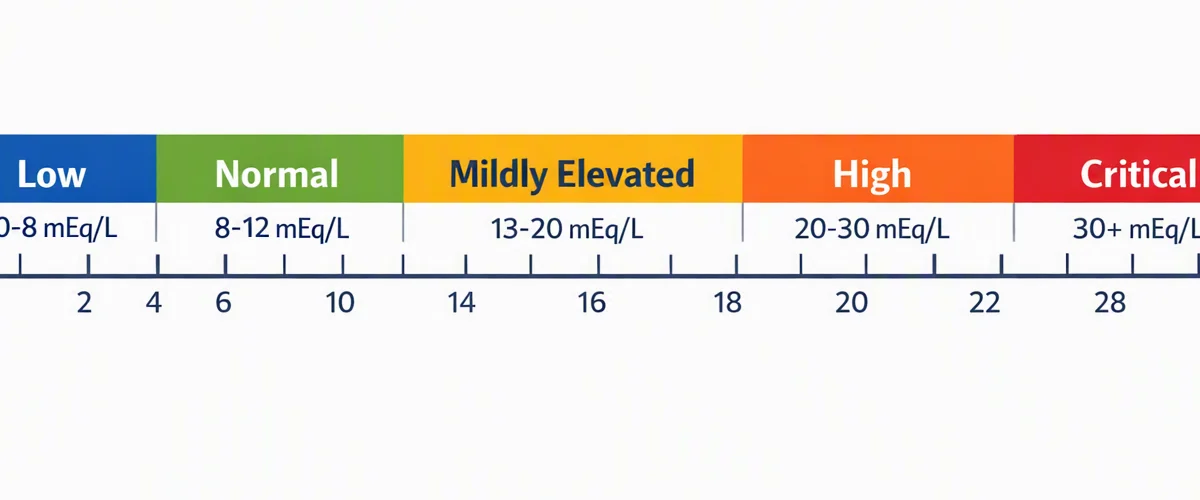
These pitfalls are why anion gap interpretation should never rely on a single uncorrected value. A normal gap may be misleading when albumin is low, when treatment has already started, or when another acid-base process is present. The goal is precise clinical interpretation, not just calculation.
Further studies to verify propionic acidemia
Anion Gap Calculator can suggest the diagnosis, but confirmatory testing is needed to diagnose propionic acidemia. The most helpful studies include plasma amino acids, urine organic acids, methylmalonic acid testing, and genetic testing.
Plasma amino acids can show patterns compatible with an inborn error of metabolism. Urine organic acids are especially important because they can identify the accumulation of characteristic metabolites. These tests support the diagnosis by showing the metabolic signature of the disorder rather than just its effect on acid-base status.
Methylmalonic acid is also useful because the differential diagnosis includes disorders that can look similar. Some patients with related metabolic disorders may present with overlapping laboratory findings, so separating among them is essential. The result of this testing helps narrow the diagnostic evaluation.
Genetic testing can establish the underlying defect and inform long-term planning. In propionic acidemia, identifying the causal variant may help with family counseling, recurrence risk assessment, and treatment planning. Genetic confirmation is particularly important when lab results are incomplete or when the clinical picture is atypical.
These tests should be reviewed in combination with blood chemistry, ammonia, ketones, and the anion gap. Together, they create a more comprehensive diagnostic evaluation and reduce the risk of missing another organic acidemia or an overlapping disorder.
Management considerations in metabolic emergencies
When facing a metabolic crisis, treatment focuses on swift stabilization and emergency treatment of the underlying metabolic decompensation. Common measures include intravenous fluids, carnitine, and protein restriction, along with careful monitoring of acid-base status and laboratory markers.
Intravenous fluids serve to address fluid loss and maintain circulation. They also may lessen catabolism by supporting metabolic stability. In many cases, glucose-containing fluids are used to curb additional breakdown of protein and fat, which can exacerbate organic acid accumulation.
Protein restriction is often used temporarily during acute illness to decrease the generation of toxic metabolites. Because propionic acidemia involves impaired metabolism of certain amino acids, limiting protein intake during the crisis can decrease metabolic stress. This must be done carefully, with attention to nutritional needs and specialist guidance.
Carnitine supplementation may be part of therapy, particularly when carnitine deficiency is suspected. Supporting carnitine stores can aid in the removal of harmful organic acids and help improve metabolic handling. The exact approach depends on the clinical EG toxic alcohol AG situation and treatment protocols.
Emergency management also includes ongoing reassessment of blood chemistry, ammonia, lactate, and the anion gap. Serial monitoring helps determine whether the patient is improving or whether escalation of care is needed. Because symptoms can worsen quickly, timely recognition of a high anion gap metabolic acidosis can make a significant difference in outcomes.
For patients with known propionic acidemia, having a clear action plan is essential. Families and care teams should know when to seek urgent care, what lab values to track, and how to respond to early signs of illness. The anion gap calculator is one useful part of that larger emergency framework.
FAQs about anion gap and propionic acidemia
In what way does propionic acidemia lead to a high anion gap?
Propionic acidemia leads to accumulation of organic acids, particularly propionic acid and related metabolites, because of propionyl-CoA carboxylase deficiency. Such unmeasured acids consume bicarbonate and raise the anion gap, causing high anion gap metabolic acidosis and acidemia.
Which values do I need to use an anion gap calculator?
Most calculators use serum sodium, serum chloride, and serum bicarbonate. Some versions also include potassium. To understand the result correctly, serum albumin should also be reviewed so albumin correction can be applied when needed.
Is it necessary to anion gap be corrected for albumin?
Yes, especially when serum albumin is low. Hypoalbuminemia can make the anion gap look normal even when a metabolic acidosis is present. Albumin correction improves laboratory interpretation and may show the true acid-base status.
May propionic acidemia have a normal anion gap?
Yes. A normal anion gap can occur if the patient has hypoalbuminemia, a mixed acid-base disorder, partial treatment, or another factor that masks the expected elevation. That is why the anion gap should be interpreted with the full clinical picture and not used alone for diagnosis.
What other tests help confirm propionic acidemia?
Helpful confirmatory tests include plasma amino acids, urine organic acids, methylmalonic acid testing, and genetic testing. These studies support the diagnosis by identifying the biochemical and genetic pattern of the disorder, while the anion gap calculator helps with initial detection and monitoring.