An anion gap of 12 is usually a normal range finding, but the interpretation depends on the lab’s reference range, the rest of your lab results, and whether you have related symptoms. In most cases, a value of 12 does not indicate a problem by itself. It is best considered as one piece of a larger picture, especially when reviewing a blood test or serum panel that includes electrolytes.
What Is the Anion Gap?
The anion gap is a derived value based on the primary charged particles in your blood. It helps clinicians determine whether the body is maintaining electrical balance in a way that fits normal chemistry. In plain language, it compares cations and anions to look for clues about hidden acids or other shifts in the body.
Most commonly, the anion gap is derived from sodium, chloride, and bicarbonate. These are key parts of an electrolyte panel and help show how well your body is keeping its acid and base levels in balance. Because the result is indirect, it is not a diagnosis on its own. Rather, it serves as a clinical clue that can point toward a metabolic disorder or another underlying issue if the number is outside the expected range.
The anion gap is useful because it reflects how the body handles acids in the blood. It can help detect acid accumulation and guide the evaluation of acid-base balance. For that reason, clinicians often review it alongside serum bicarbonate, kidney function markers, and other values from the same serum panel.
What Does an Anion Gap of 12 Indicate?
An anion gap 12 is commonly considered expected in many laboratories. But, the meaning depends on the individual lab reference range. Some laboratories use a range that places 12 squarely in the midpoint, while others https://ameblo.jp/anion-gap-tracker676/entry-12977241822.html use a different cutoff. This is why the same number can be interpreted differently depending on the report.
If your result is 12, the key question is whether it is inside that lab’s reference range. If it does, the value usually suggests that there is no obvious sign of a major acid imbalance from this one measurement alone. If it is slightly off or paired with other unusual lab results, the clinical meaning may differ. This is why a result should be considered in context rather than assessed in isolation.
Many people search for an anion gap calculator because they want a rapid answer. While that tool can help you work out the number, the real clinical interpretation depends on the full picture: symptoms, the rest of the electrolyte panel, and the possibility of a hidden underlying cause. A reassuring value is reassuring, but it does not replace a professional medical evaluation if you are feeling ill.
In what way the Anion Gap Is Calculated
The classic anion gap formula reads:
Anion gap = sodium - (chloride + bicarbonate)
This formula draws on the main measured ions from an electrolyte panel. Sodium acts as the dominant measured positive ion, while chloride and bicarbonate act as important measured negative ions or base components in the bloodstream. The result reflects the gap between what is measured and the body’s need to preserve balance.
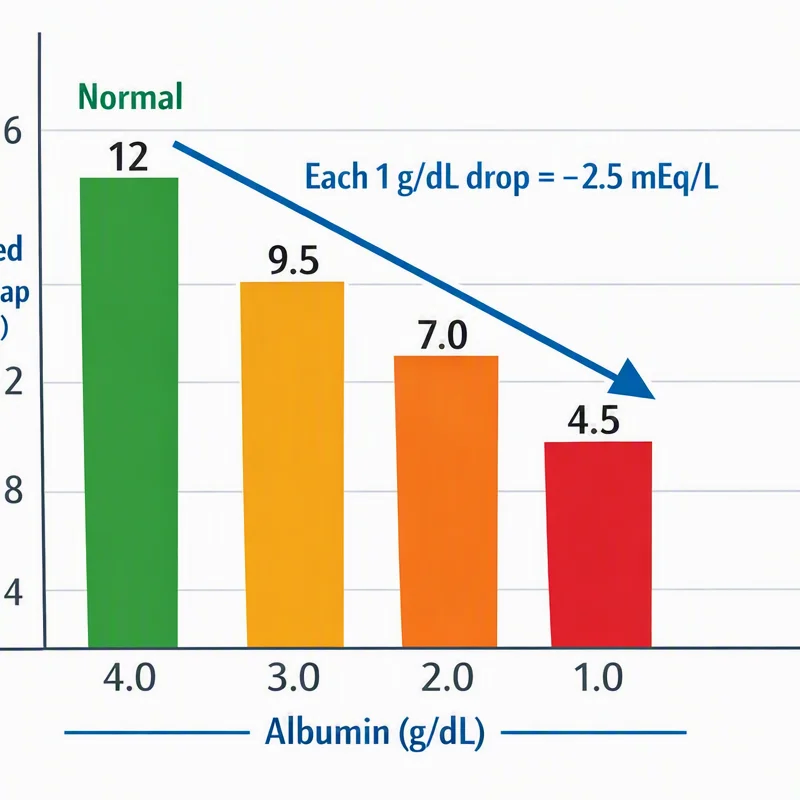
Some versions of the calculation also consider albumin, because albumin is a negatively charged protein that influences the final number. Since albumin is not always included directly in the formula, the raw result may need albumin correction in certain situations. This is especially important if protein levels are low or if the result seems inconsistent with the person’s condition.
Since the anion gap is built from routine blood chemistry values, it is often part of a broader serum panel or screening test. It does not measure one disease. Instead, it helps highlight patterns that may suggest an acid-base issue or another metabolic disorder.
Is an Anion Gap of 12 Normal?
In many cases, yes. An normal anion gap often has a value around 12, but the exact meaning depends on the lab’s method and the local reference range. Multiple instruments and reporting styles can shift the expected number slightly, which is why lab variation matters.
The clearest way to interpret the value is through clinical interpretation. A 12 may be normal if the person feels well and other chemistry values are stable. It may be less reassuring if there are symptoms, a low bicarbonate value, or signs of electrolyte imbalance. The number is one clue in the bigger story of acid-base balance.
Another reason a result of 12 can be confusing is that people may compare it with a different lab’s range or with online information that uses another cutoff. That can create unnecessary worry. The most accurate answer comes from the exact report, the lab reference range, and the overall pattern on the blood test.
In short, an anion gap of 12 is often a normal finding. It usually does not indicate disease by itself, but it should be interpreted along with symptoms, medication use, and related chemistry results.
What Might Cause a High/Low Anion Gap?
A above-normal anion gap can suggest metabolic acidosis, a condition where acids collect or bicarbonate is consumed faster than usual. A classic cause is lactic acidosis, which can occur when tissues are not getting enough oxygen or when the body is under severe stress. Another well-known cause is ketoacidosis, when the body generates ketone bodies and the blood becomes increasingly acidic.
On the other hand, a low anion gap is uncommon and can be associated with hypoalbuminemia, because lower albumin levels decrease the amount of unmeasured negative charge in the blood. It can also result from certain lab or measurement issues, though those are less frequent than a true clinical cause. In some situations, a low result points to the need for repeat testing or a more careful review at the full serum panel.
Other causes of an elevated or reduced value can include shifts in kidney handling of acids, shifts in chloride, or changes in the buffering system that maintains balance. Since the anion gap reflects a broader buffer system, it can move when the body is dealing with acid base stress even before symptoms are obvious.
Important takeaways include:
- A high result may point toward metabolic acidosis. Lactic acidosis and ketoacidosis are common high-gap causes. A low result can happen with hypoalbuminemia. The overall context matters more than one number.
In What Way Does Albumin Affects the Anion Gap
Serum albumin has a major role in interpreting the anion gap because it bears a substantial negative charge in the blood. When serum albumin is low, the measured anion gap may look lower than expected even when acid-base status is not truly normal. That is why clinicians sometimes use albumin-adjusted correction to estimate a more accurate final value.
This correction helps account for protein levels that may change the interpretation. A person with low albumin can have a “normal” raw result that actually hides an elevated gap after correction. In that case, the corrected number may indicate a more important acid-base issue than the unadjusted value.
Adjusted anion gap calculations are especially useful when there is concern for chronic illness, poor nutrition, inflammation, liver problems, or fluid shifts that affect serum albumin. The correction does not replace other testing, but it can increase the accuracy of the clinical interpretation.
In practical terms, if albumin is low, the uncorrected anion gap may downplay the severity of the problem. That is why a result that looks normal on paper should still be interpreted closely if the overall clinical picture suggests illness.
When You Should Speak With a Healthcare Professional
You should speak with a healthcare professional if the result does not correspond to how you feel, if the value is out of range for the lab’s range, or if you have concerning symptoms. Signs like vomiting, confusion, rapid breathing, severe fatigue, dehydration, or weakness may require immediate assessment. These can be signs of an electrolyte imbalance or a more serious acid-base issue.
Follow-up is also important if you have known kidney disease. The kidneys help control acids, bicarbonate, and electrolytes, so changes in kidney function can affect the anion gap and overall chemistry. Even a mild abnormality may need attention if it fits with other findings.
Sometimes the next step is simply follow-up testing. A repeat blood test may confirm whether the value is stable or whether it changes over time. If the result is part of a broader concern, additional testing may include kidney studies, albumin measurement, or repeat electrolytes.
Reach out sooner if you have:
- New or increasing symptoms Known kidney disease A sign of electrolyte imbalance A result that seems inconsistent with your health status
Anion Gap Calculator: How to Use It
An anion gap calculator can help you estimate the value from your chemistry numbers. To use it, you typically enter the relevant input values from your blood work, including serum sodium, serum chloride, and bicarbonate. The calculator then applies the anion gap formula and shows the result.
Some calculators also let you add albumin so you can estimate an albumin correction. This is useful when the raw result may be less helpful because of abnormal protein levels. If albumin is low, the corrected number may be more informative than the original result.
To obtain the most accurate estimate, make sure you use the exact numbers from your lab report. Minor differences in the electrolyte panel can change the result slightly. That is why the calculator is best used as a guide, not as a substitute for expert review.
Here is a simple way to look at it:
- Input the reported serum sodium, serum chloride, and bicarbonate values. Review whether the answer fits the lab’s reference range. If albumin is available, see whether a corrected value affects the interpretation. Treat the result as a starting point for discussion, not a final diagnosis.
An anion gap calculator is especially valuable when you want to understand whether a result of 12 is truly normal or simply normal for that specific lab. It can also help show whether a different number may suggest an acid-base problem.
Frequently Asked Questions
What is considered a normal anion gap?
A normal range depends on the laboratory, but many results around 12 are considered normal. The best guide is the lab’s own reference range, since methods and reporting styles can differ. A value that is normal for one lab may be different enough in another.
Does an anion gap of 12 mean anything is wrong?
Usually not by itself. An anion gap 12 is often a normal finding and may simply reflect ordinary blood chemistry. It becomes more meaningful only when paired with symptoms, abnormal bicarbonate, or other changes on a blood test.
What causes a high anion gap?
A high result can be a sign of metabolic acidosis. Common causes include lactic acidosis and ketoacidosis, though there are others. A clinician uses the result as one part of the overall clinical interpretation and looks for the underlying cause.
Can low albumin affect the anion gap?
Indeed. Low albumin can reduce the measured gap, which is why albumin correction may be needed. In people with hypoalbuminemia, the raw number can appear normal even when the corrected anion gap shows a different story.
How do I use an anion gap calculator?
Enter the input values from your serum panel, especially serum sodium, serum chloride, and bicarbonate. If available, enter albumin to estimate a corrected result. The tool can assist you with the anion gap meaning, but a healthcare professional should interpret the result in context, especially if there is concern for an acid-base disorder or electrolyte imbalance.